Key takeaways
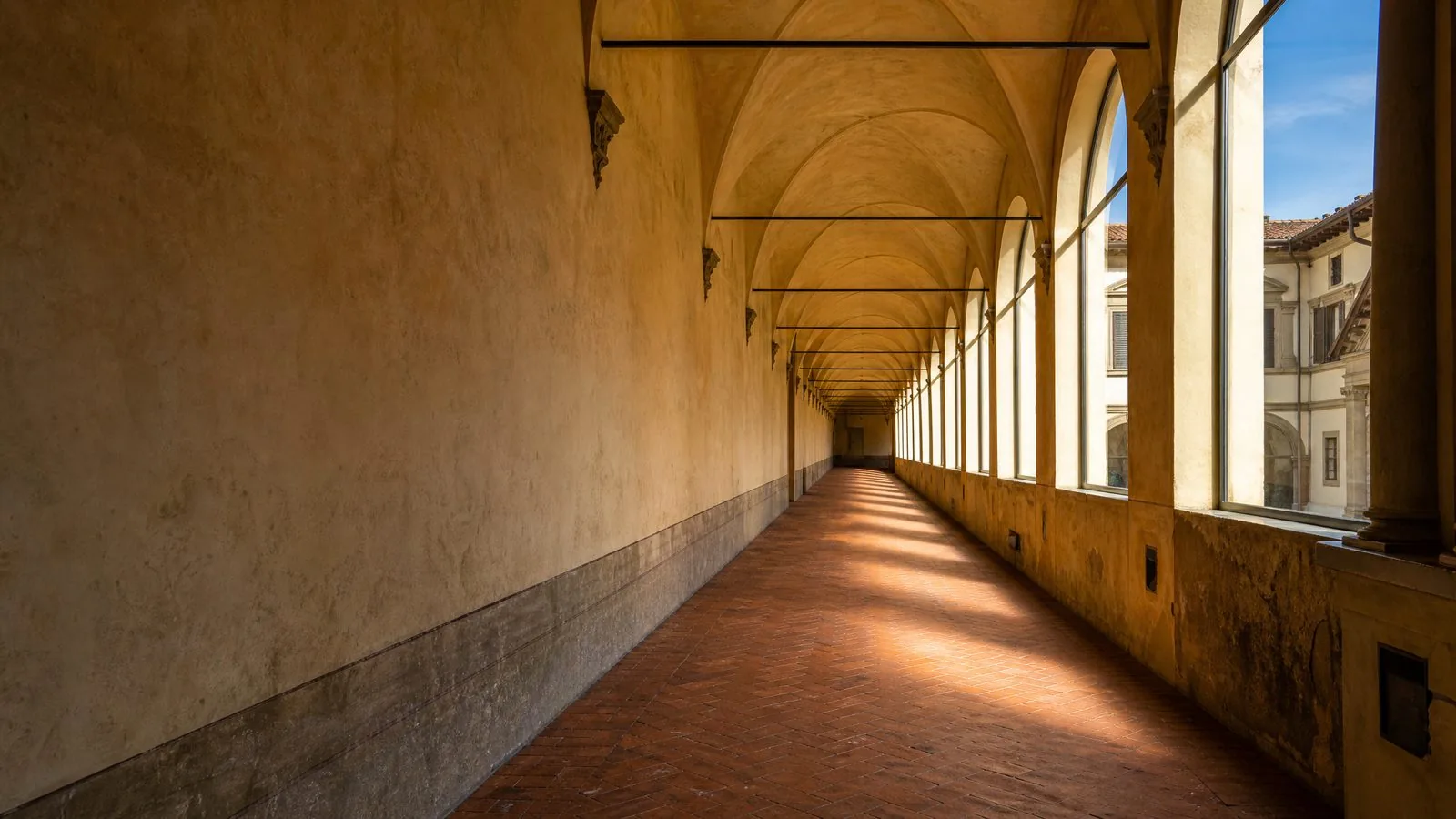
- It reopened on 21 December 2024, restored to what the Uffizi calls its “original bareness” after closing in 2016 — what that leaves you looking at.
- The self-portraits have moved out. They hung here from 1973 to 2016 and now occupy twelve rooms on the Uffizi’s first floor — whether the walk still earns its slot.
- More than seven hundred metres, walked one way, from Room D19 on the gallery’s first floor to a door in the Boboli Gardens — how much of the day to set aside.
- You come out on the Oltrarno side of the river, a quarter of an hour’s walk back over the Ponte Vecchio — plan the afternoon from the Pitti end.
- The Uffizi closes on Mondays, on 1 January and on 25 December, and the corridor closes with it — the days that are simply out.
What a corridor booking actually covers
Every option here pairs the corridor with the Uffizi, because that is how the museum sells it. After that the six products diverge, and the difference is worth reading before you pay.
On every option
- A reserved, timed entry to the corridor — reservation is mandatory
- Entry to the Uffizi on the same booking
- The one-way walk from Room D19 to the door beside the Buontalenti Grotto
- A confirmation naming the meeting point for your booking option
Depends on the option
- Whether a licensed guide leads the gallery portion
- Whether that guide walks the corridor with you, or hands you over at the door
- An audio app you install before arriving, or an audio guide
- A tasting of Tuscan products on some booking choices
- Re-entry to the Uffizi after the passage on one of the guided options
Not in the price
- Entry to the Boboli Gardens, which normally needs its own ticket
- The Pitti Palace interiors
- Food, drink and hotel pickup
- Anything the operator lists as excluded — read that list on the booking page
The walk, in order
Nine things you pass between the gallery and the gardens, and why each one is there.
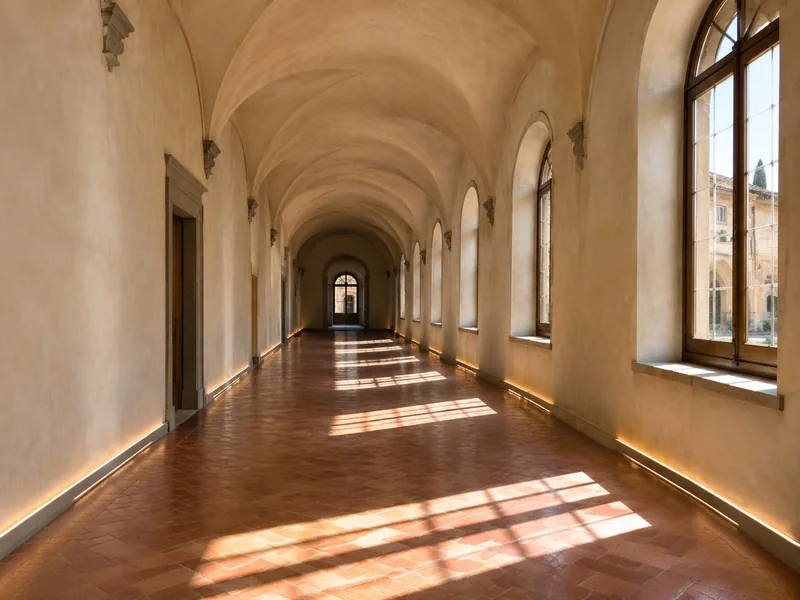
The corridor was a piece of infrastructure before it was a sight. It let the ruling family move between Palazzo Vecchio, the seat of government, and Palazzo Pitti, the residence, without meeting anyone they had not chosen to meet. Walking it end to end is the only way to feel how deliberate that was.
- Room D19, Uffizi first floor — The door into the corridor is inside the gallery, so you are already through security when the walk begins.
- The Uffizi west corridor — The passage sets off through the building Vasari raised between 1560 and 1580 as offices — uffizi — for the Florentine magistracies.
- Over the Arno — The route crosses the river without touching a street, which was the whole reason it was commissioned.
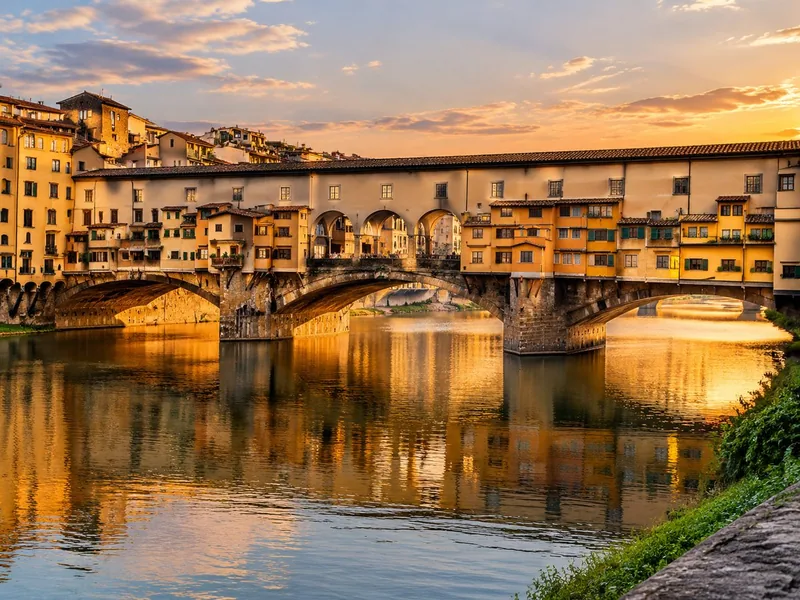
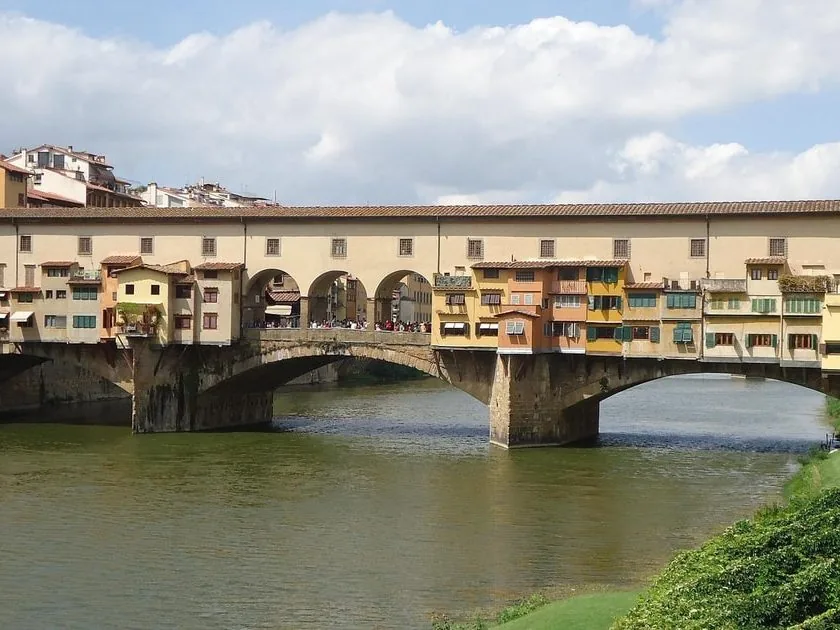
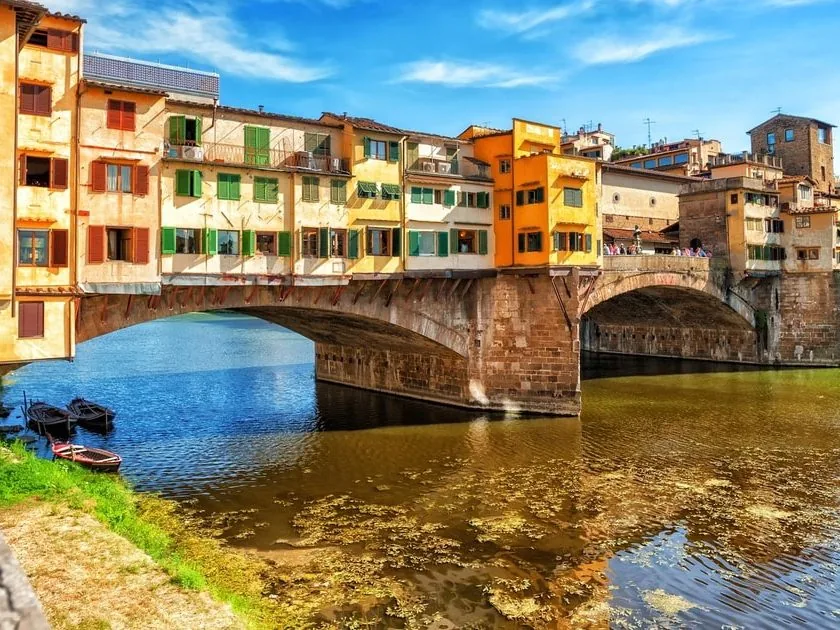
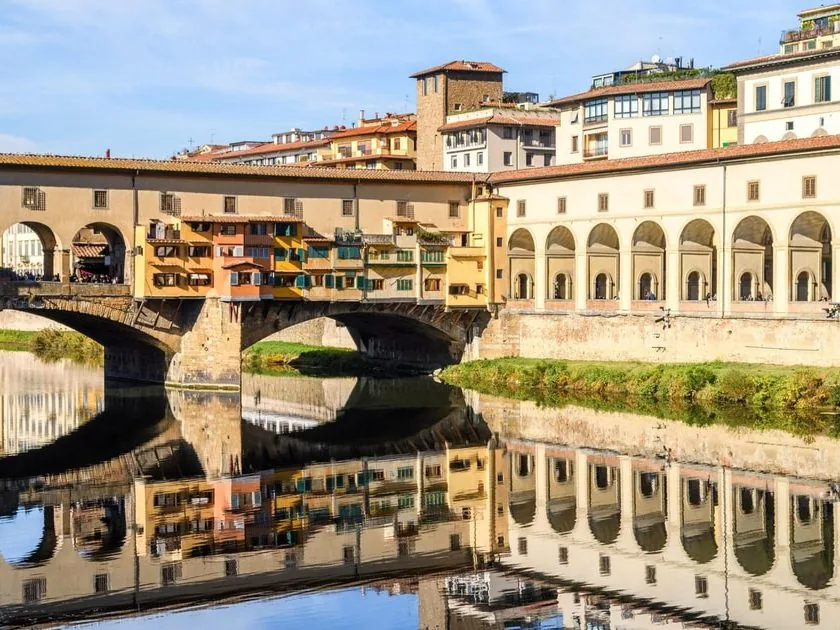
- The windows above the Ponte Vecchio — You walk the length of the bridge above the shopfronts. The butchers were moved off so the smell would not reach the passage; goldsmiths were established there by 1593 and have never left.
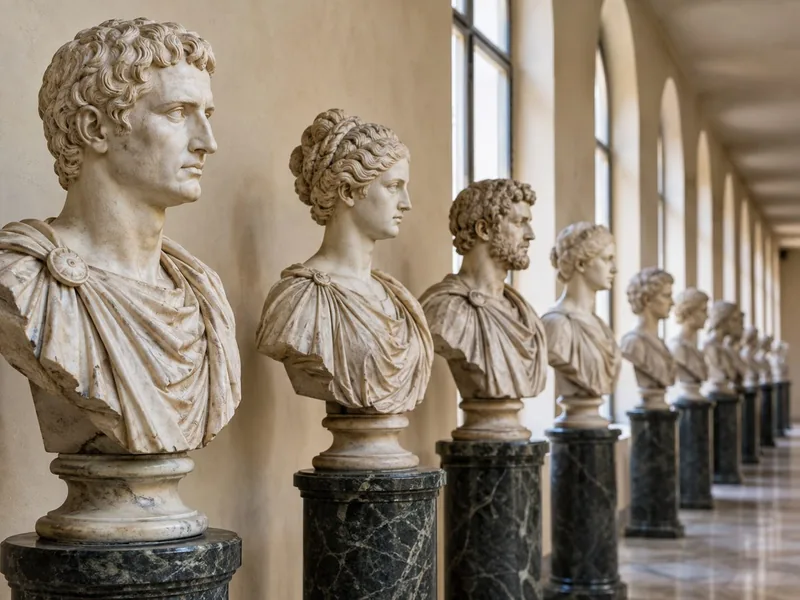
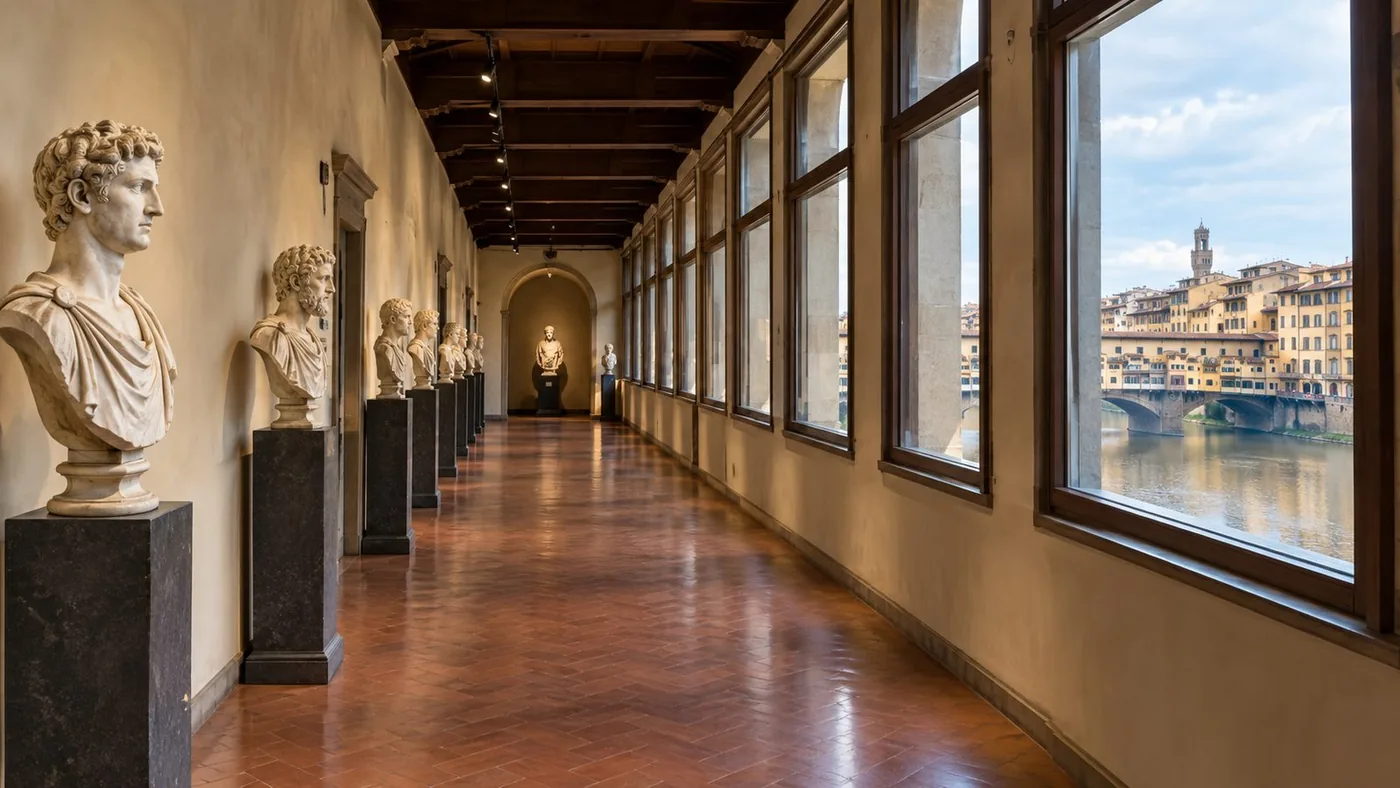
- The Roman busts — In July 2025 the Uffizi set more than fifty marble portrait heads along this stretch on dark pedestals, Cicero and Augustus among them, most of them bought on the eighteenth-century antiquities market by Luigi Lanzi and in storage since 1993.
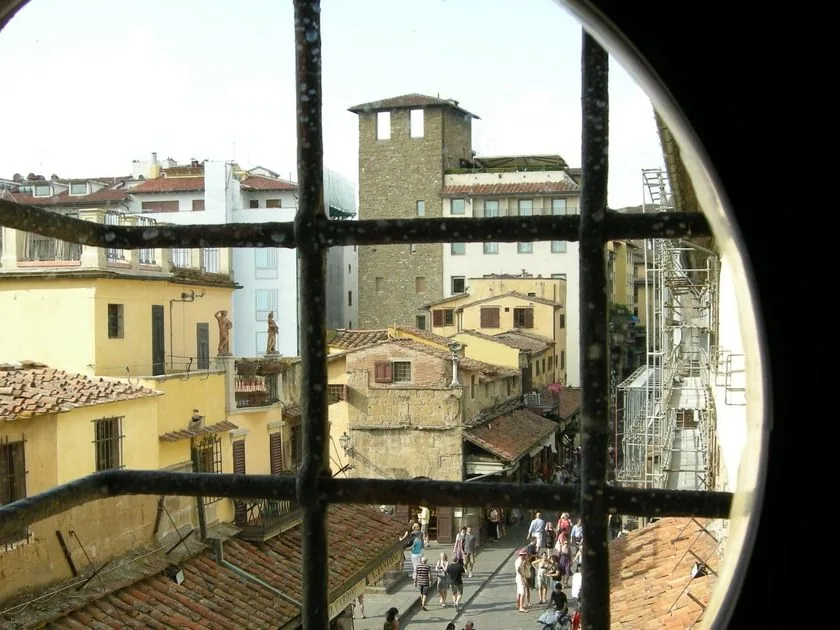
- The Mannelli tower — The Mannelli family refused to let their medieval tower be pulled down, so the corridor was carried around its western face on stone brackets. It is the one place where a private family said no to the Medici and won.
- The Santa Felicita balcony — Above the church façade, a balcony behind a heavy railing looks down into the nave, so the Grand Duke’s household could attend mass without sitting in the congregation.
- The Oltrarno stretch — The last section runs on above the far bank towards the Pitti estate, and the noise of the city arrives through the glass rather than around you.
- The door by the Buontalenti Grotto — The exit opens into the Boboli Gardens beside the grotto. There is no walking back: the corridor is one way and the door is the end of it.
That last line matters more than it sounds. You start on the Piazza della Signoria side and finish across the river, about a quarter of an hour’s walk back over the Ponte Vecchio, so a lunch table booked near the Duomo is a worse idea than it looks on a map. We would plan the rest of the day from the Pitti end and let the walk home be the walk home. More on that, and on finding the entrance in the first place, on getting there.
How booking works
Decide what you want from it
Bare architecture at your own pace, or somebody reading the building to you as you go.
Compare the six options
They differ on the guide, the languages and where they start. We line them up on the all-tours page.
Check live dates on GetYourGuide
The current price, the exact inclusions and the cancellation terms sit on the operator’s page, where they stay up to date.
Arrive early and travel light
Bag checks are the usual cause of a slow entry. Large bags, backpacks and umbrellas go to the cloakroom — see what to bring.
Check dates for the corridor
The timed-ticket option is the one most people book. The widget below carries the operator’s live prices and remaining slots, rather than a figure we typed in months ago.
Ticket, small group or private?
Three formats and three different reasons to pick them. Prices and durations move about, so this table sticks to the things that do not.
| Uffizi Gallery & Vasari Corridor Reserved Entry Ticket | Most peopleUffizi Small-Group Guided Tour with Vasari Corridor Access | Vasari Corridor & Uffizi Gallery Exclusive Private Tour | |
|---|---|---|---|
| Format | Reserved timed ticket, no guide | Licensed guide through the Uffizi, small party | Your own guide, your own party |
| Guide inside the corridor | No — you walk it yourself | No — the corridor is walked one way, unguided | Yes on the guided walk-through; confirm the option at booking |
| Languages | No live guide; an audio-guide variant is sold as a second option | English, headsets when the group needs them | Italian, English, Spanish, French and German |
| Where it starts | At the Uffizi, on your timed slot | The Leonardo da Vinci statue | The Neptune Fountain, Piazza della Signoria |
| Best for | Reading the building on your own terms | A guided Uffizi with corridor access attached | Non-English speakers, and anyone who wants to stop and ask |
| View → | Book this → | View → |
Photo Gallery
The corridor and the walk around it
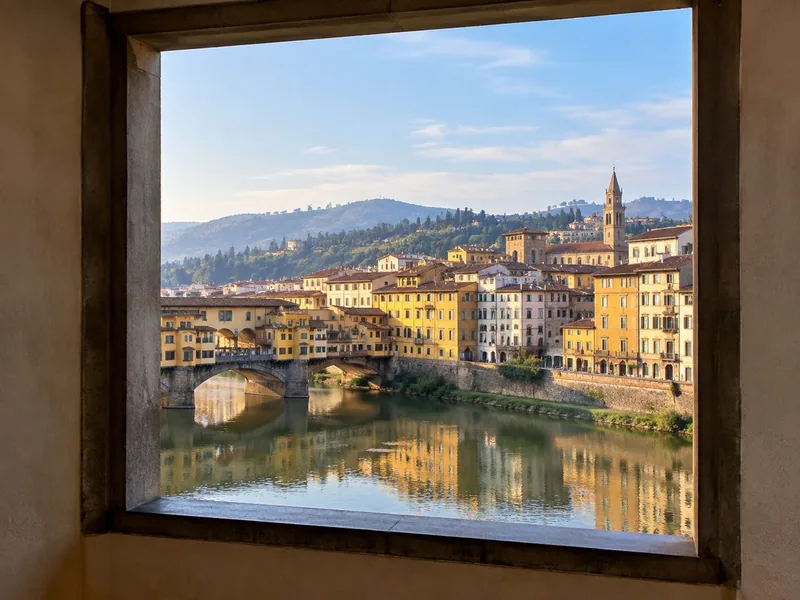
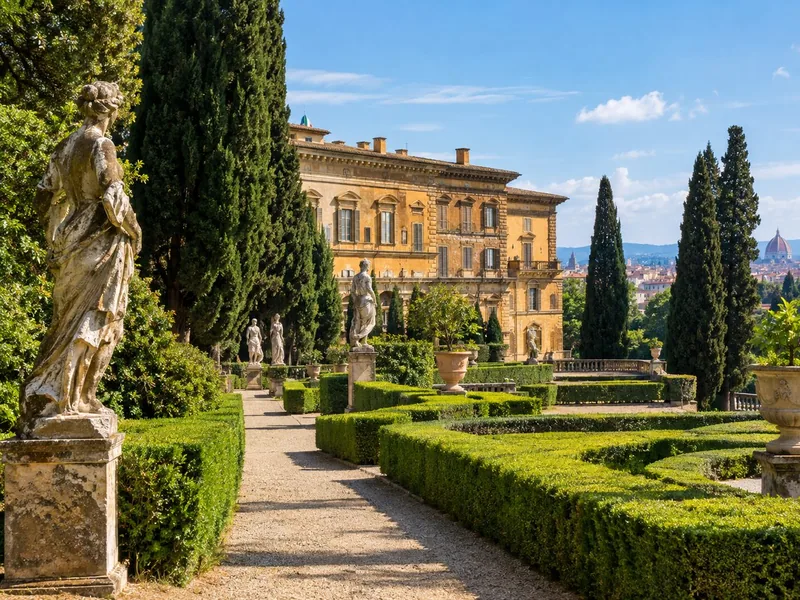
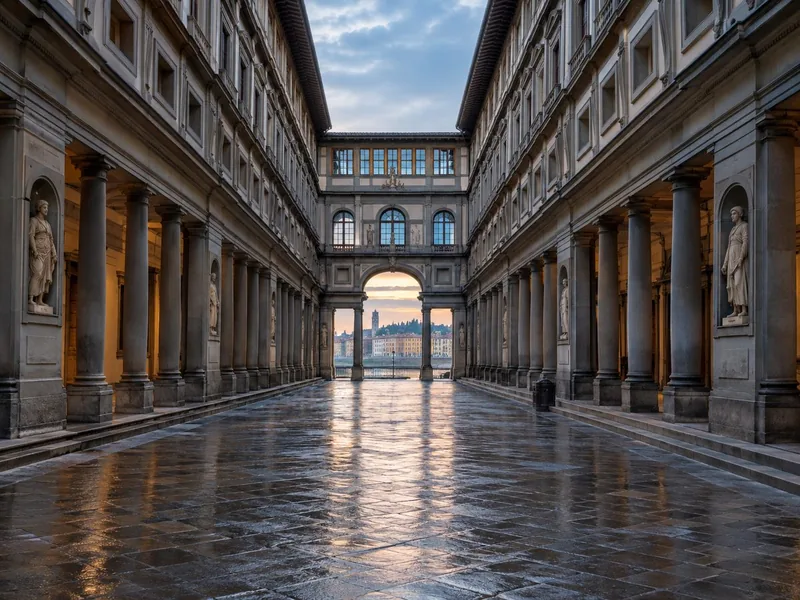
The passage, the bridge it crosses and the gardens it ends in.
Every way to book the corridor
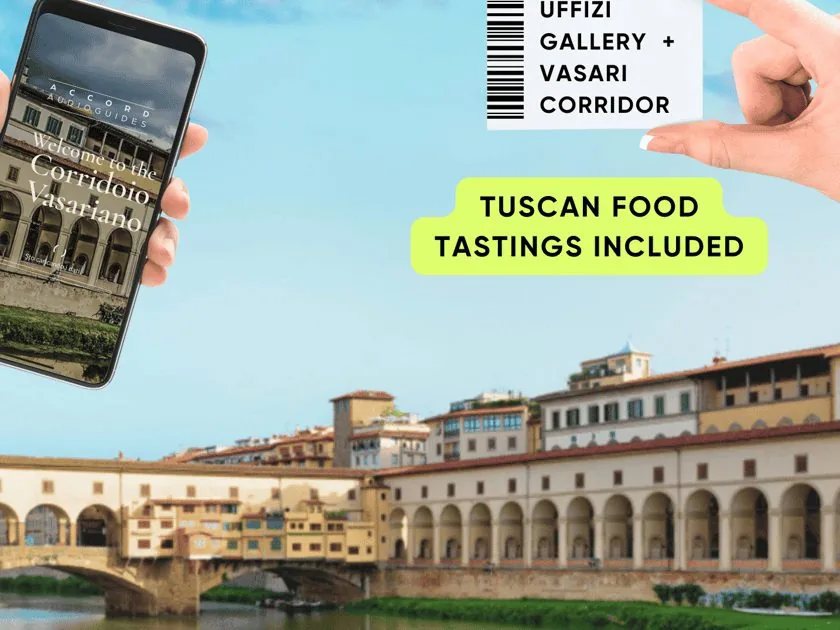
Six GetYourGuide activities open the passage. They differ in who talks to you, in what language, and where you meet — the review pages take them one at a time.
 Ticket + appCorridor access
included
Ticket + appCorridor access
includedUffizi & Vasari Corridor Timed Ticket with Audio App
 Self-guidedCorridor
access included
Self-guidedCorridor
access includedUffizi Gallery & Vasari Corridor Reserved Entry Ticket
 Small groupCorridor
option
Small groupCorridor
optionUffizi Small-Group Guided Tour with Vasari Corridor Access
 Max 9 peopleCorridor option
Uffizi Masterworks Tour (Max 9) with the Medici Passage
 Guide throughoutCorridor
option
Guide throughoutCorridor
optionUffizi Gallery Guided Tour with Optional Vasari Corridor
 PrivateCorridor
access included
PrivateCorridor
access includedVasari Corridor & Uffizi Gallery Exclusive Private Tour
What reviewers say about walking it
Snippets from travellers who booked through GetYourGuide, names as they appear there.
The audio guide points out more than you have time to stand and look at. Go in knowing you will not get to everything it mentions.
Walking the corridor, we were overcome by a moment of genuine emotion.
It has been refurbished to a modern standard, so the pull is treading the route the Medici took rather than seeing an old interior.
I know this city and I had never been allowed in here. That was the pleasure of it.
The two apps you install beforehand did the job, and the tasting of Tuscan products on our booking option was a good end to it.
A couple of hours was enough for the gallery itself. It’s amazing to walk through the Vasari corridor, and that is the part we remember.
Quoted from public GetYourGuide reviews, first names as the reviewers left them. Current ratings live on each activity page. Read our own tour reviews ›
Quick answers before you book
The questions we are asked most, answered without the sales voice.
Is a guide worth paying for here?
The corridor is spectacular as a building and almost silent as a museum. There are no labels to read, because there is barely anything left to label. That is precisely the situation where a good guide earns the difference, since most of what is interesting about the passage is invisible without someone to point at it: the Mannelli detour, the railing above Santa Felicita, why goldsmiths ended up on the bridge at all. If you would rather read a building yourself, a plain timed ticket does the same job for less. We set out the case for paying more on private and small-group tours.
Which is the plainest way in?
A reserved entry ticket covering the Uffizi and the corridor on one timed slot, with no guide and no group to keep pace with. An audio-guide variant exists as a second booking option if you want commentary without a person attached to it. What you give up is context, and on a walk this bare that is a real loss for some people. Our cost page explains what pushes a booking up or down without quoting a figure that will be wrong by next month.
Can we do the gallery and the corridor in one morning?
Most people can, if they treat the Uffizi as a route rather than a sweep. One reviewer from Hong Kong found a couple of hours in the gallery enough and remembered the corridor as the better half. The trap is arriving with the afternoon already booked on the Signoria side, because the corridor puts you out across the river. See how long it takes for a realistic shape to the half-day.
What if someone in the party uses a wheelchair?
The Uffizi has fitted the restored corridor with an integrated system of ramps, platforms and lifts, and describes it as wheelchair accessible. The tour products are a separate matter: one of the guided options states outright that it is not suitable for wheelchair users, and no operator’s provision is ours to promise on their behalf. Read the access notes on the specific booking page, then our accessibility page for the gap between what the museum provides and what an operator will commit to.
Do we have to book ahead?
Yes. Reservation is mandatory, entry runs by timed slot and groups are capped at twenty-five people plus two staff, so there is no turning up and hoping. Book the slot before the flight and build the day around it rather than the other way round. All six options are booked online ahead of time; the confirmation and cancellation terms for each are on its own booking page.
Can’t make these dates?
Browse other Vasari Corridor tours and find one that fits your schedule. Dates, prices and cancellation terms come straight from GetYourGuide.
The Vasari Corridor, explained
Almost everything written about the Vasari Corridor online describes a place that no longer exists: a cramped tunnel hung with self-portraits, seen on a rare private visit. That version ended in 2016. What reopened on 21 December 2024 is the building itself, emptied out. Here is the passage as it now stands, and how it got that way.
Why a ruler builds a private road
In 1565 Cosimo I de’ Medici governed Florence from Palazzo Vecchio and lived across the river in Palazzo Pitti, and between the two lay the city he governed. The corridor solved that. It runs from the south side of Palazzo Vecchio, through the Uffizi, over the Arno along the top of the Ponte Vecchio, through the Oltrarno and into the Pitti beside the Boboli Gardens, and at no point does it touch a street. The Uffizi Galleries put its length at more than seven hundred metres over the heart of the city; you will see “about a kilometre” elsewhere, and we would take the museum’s own figure. Safety was one reason. Distance from the governed was the other.
Five months, and a wedding to be ready for
Giorgio Vasari — the painter and architect who wrote Lives of the Artists, and who had already raised the Uffizi next door as offices for the Florentine magistracies — took the commission in 1564 and finished in about five months. The deadline was the marriage of Cosimo’s son Francesco to Joanna of Austria. Five months for a covered road across a river and a working bridge is a startling pace, and it shows: this is a road built to get somewhere rather than to be admired.
The house that said no
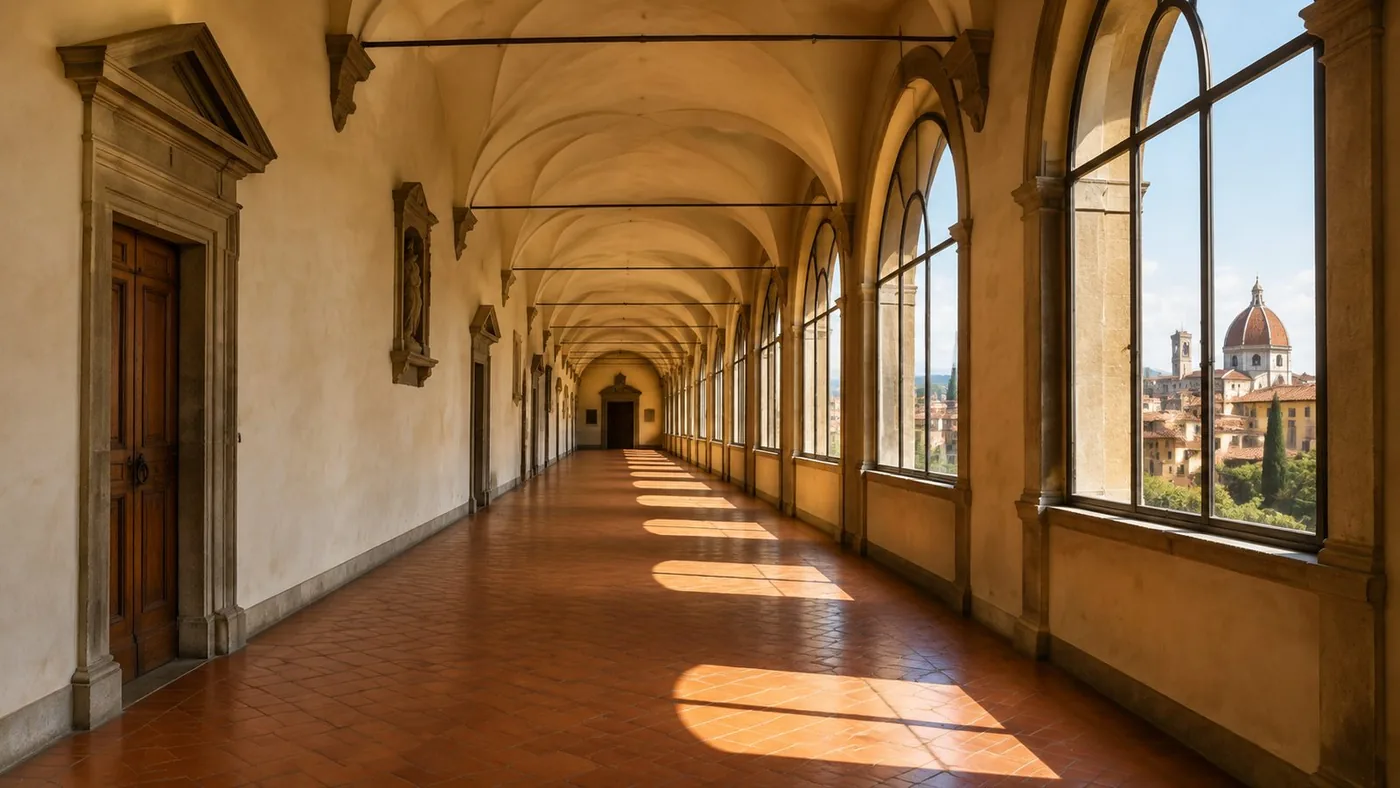
The route wanted a straight line and the Mannelli family owned a medieval tower standing in it. They refused to have it demolished, so the corridor was carried around the tower’s western face on stone brackets, and the detour is still there to walk through. It is the one place on the passage where a private family said no to the Medici and won.
A balcony over a church, and butchers off a bridge
Further along, the passage crosses above the façade of Santa Felicita and opens onto a balcony behind a heavy railing, looking down into the church interior. The Grand Duke’s family could hear mass from up there without ever being in the congregation, which says as much about sixteenth-century rule as any painting in the gallery. The Ponte Vecchio got a similar treatment: its butchers were moved off the bridge so the smell would not reach the passage above, and goldsmiths were established there by 1593 and still trade under the same windows. There is more of this on what you actually see inside.
The self-portrait years, and why they ended
From 1973 to 2016 the corridor was where the Uffizi hung its self-portrait collection, and that is the version most guidebooks still describe. The museum’s own account is blunt: the space lacked air conditioning and adequate lighting, and the paintings could only be seen on restricted, occasional visits. Since 2023 the collection has had a proper home — twelve rooms on the Uffizi’s first floor, painted pink and hung chronologically, showing a selection of 255 works from a holding of more than 2,000, described as the largest and oldest collection of self-portraits in the world. If those pictures were your reason for booking, book the gallery instead and see them where they hang now.
27 May 1993
A Mafia car bomb exploded in Via dei Georgofili, immediately beside the Uffizi. Five people were killed, two of them children, and the gallery and the corridor were damaged. Many of the Roman busts now standing in the passage had been in storage since that year. We mention it because it is part of why the building looks as it does, and for no other reason.
What “original bareness” means when you are standing in it
The corridor closed in 2016 to be brought up to modern safety standards and reopened on 21 December 2024, after a restoration reported to have cost around €10 million, with a further million-dollar donation from the American entrepreneur Skip Avansino in 2023. The museum restored it to what it calls its original bareness and describes it as an air tunnel. In practical terms: LED lighting, video monitoring, five emergency exits, toilets at the end, ramps, platforms and lifts, and groups capped at twenty-five people plus two staff. You enter from Room D19 on the gallery’s first floor and leave by a door beside the Grotta del Buontalenti in the Boboli Gardens, one way only. In July 2025 the Uffizi installed more than fifty Roman marble portrait busts on dark pedestals along the stretch above the Ponte Vecchio — Cicero, Augustus, Antoninus Pius, the empresses Faustina and Sabina among them, most bought on the eighteenth-century antiquities market by Luigi Lanzi, a former deputy director of the gallery. Fifty Roman faces and a row of windows over the river is, near enough, the content of the walk.
Who should book it
Book it if the appeal is the walk: a private elevated road built for one family, over a working bridge, with the Arno on both sides and the emperors watching. Book a guided option if you want the building read to you, since bare architecture gives an interpreter more to do than a wall of labelled paintings ever did; the case for that sits on private and small-group tours. Skip it if you were coming for pictures hung in a corridor, and spend a longer morning in the gallery instead. Our honest verdict goes further into who ends up disappointed, and all six booking options sit in one place. The slot is timed and the reservation is mandatory, so it is the part of a Florence trip to fix first.
Frequently asked questions
What is the Vasari Corridor?
It is an enclosed walkway that Giorgio Vasari built in 1565 for Cosimo I de’ Medici, linking Palazzo Vecchio to Palazzo Pitti by way of the Uffizi and the top of the Ponte Vecchio, so the ruling family could cross the city out of public view. It closed in 2016 and reopened on 21 December 2024. Our complete guide covers the history properly.
How long is the Vasari Corridor?
The Uffizi Galleries describe it as more than seven hundred metres long over the heart of the city, usually rounded to about 750 metres; some sources say roughly a kilometre, and we would trust the museum’s own figure. It is walked one way, from Room D19 to the Boboli Gardens. See how long it takes for the time side of the question.
What days is the Uffizi closed?
The gallery is closed on Mondays and on 1 January and 25 December, and open Tuesday to Sunday. Exact hours shift with the season and with special evening openings, so we do not print them. Check opening days here and the clock times on uffizi.it.
What does a Vasari Corridor ticket cost?
That depends on which of the six options you book and when, so we will not quote a number that would be wrong by next month. Self-guided combined tickets sit at the bottom of the range and private guided tours at the top. The live price is on the booking page, and our cost page explains what moves it.
Is the Uffizi better than the Accademia?
They answer different questions. The Accademia is a small museum whose reason to exist is Michelangelo’s David; the Uffizi is a very large painting collection and the only way into the corridor. If you have one morning and you came for the passage, this is not a real dilemma. We set them side by side on Uffizi or Accademia.
What is the most famous work in the Uffizi?
Botticelli’s Birth of Venus, with the Primavera in the same part of the gallery. Leonardo’s Annunciation, Michelangelo’s Doni Tondo, Titian’s Venus of Urbino and Caravaggio’s Medusa are the other names people arrive with. We arrange them into a walking order on Uffizi highlights.
Do I need a passport to visit the Vasari Corridor?
No. Photo identification can be asked for where a ticket is a reduced or free-entitlement type, or where a name is printed on the reservation, so carry something with your name on it and stop worrying about the passport. Bag rules hold people up far more often — see what to bring.
Is the Vasari Corridor wheelchair accessible?
The Uffizi fitted the restored corridor with an integrated system of ramps, platforms and lifts, and describes it as wheelchair accessible. Individual tour products are a different matter, and one guided option states that it is not suitable for wheelchair users, so confirm on the booking page before paying. Our accessibility page keeps the two apart.
Still have questions? Email us [email protected]